Fax Form 2848 or Form 8821 to the IRS
Fax Form 2848 (power of attorney) or Form 8821 (tax information authorization) to the IRS CAF unit for the taxpayer’s state: 855-214-7519 for Memphis, 855-214-7522 for Ogden, or 855-772-3156 for the international team (304-707-9785 when faxing from outside the US). A faxed form needs a handwritten ink signature; a form signed electronically can only be submitted online. FaxJet sends it from your browser for $2.99, with a receipt.
Faxing from your iPhone? Get the app
How to fax Form 2848 or 8821
- 01
Sign in ink
Print the form, sign and date it by hand, then scan or photograph every page. Typed, drawn or pasted signatures are accepted online only.
- 02
Find the right number
Use the table below: the number depends on where the taxpayer lives, not on where you are.
- 03
Send all pages together
Put the form and any attachment, like a copy of an earlier power of attorney, in one fax.
- 04
Keep the receipt
The IRS doesn’t confirm faxed forms. Your FaxJet receipt with its confirmation number shows when it went through.
At a glance
- Memphis CAF fax
- 855-214-7519
- Ogden CAF fax
- 855-214-7522
- International CAF fax
- 855-772-3156, or 304-707-9785 from abroad
- Signature on a faxed form
- Handwritten in ink
- FaxJet price
- $2.99 up to 10 pages
Sending the signed form
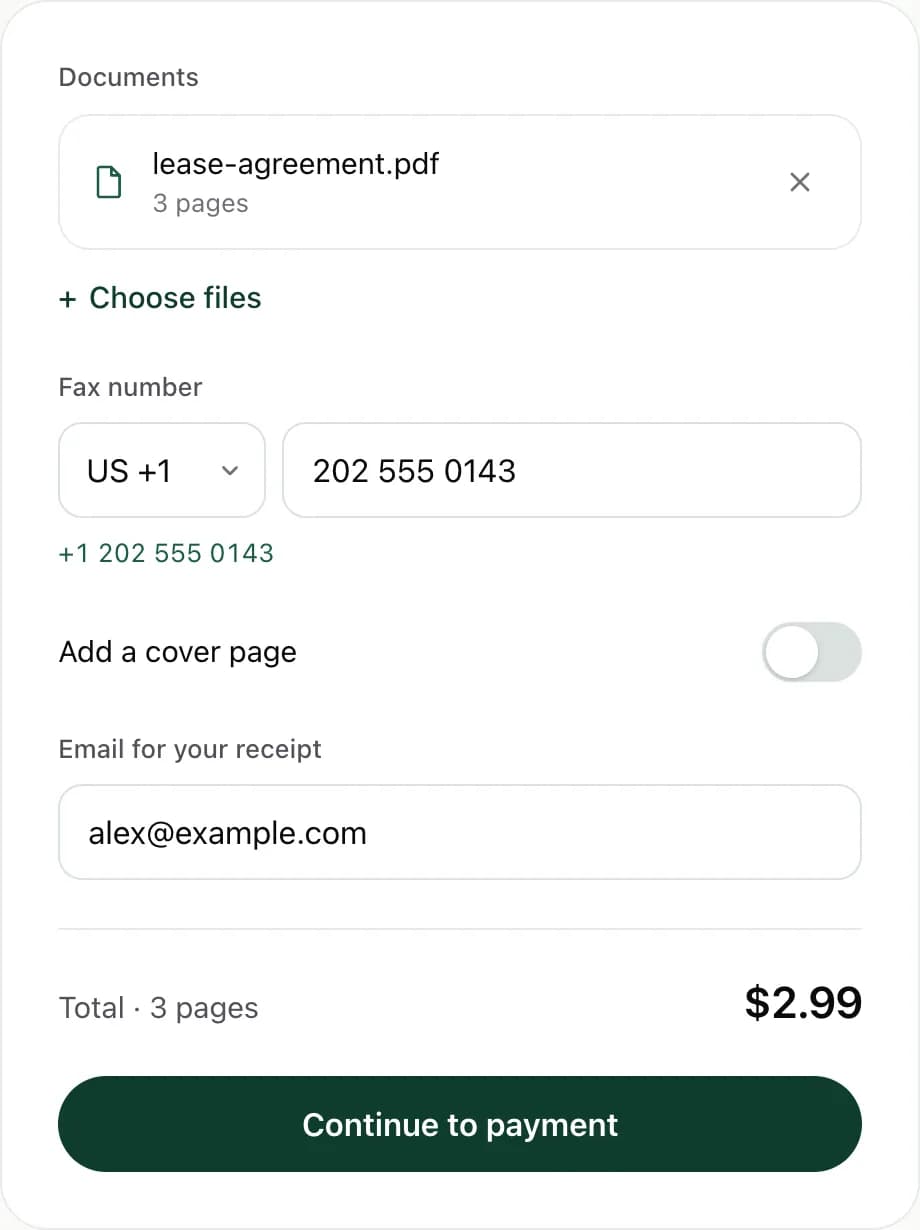
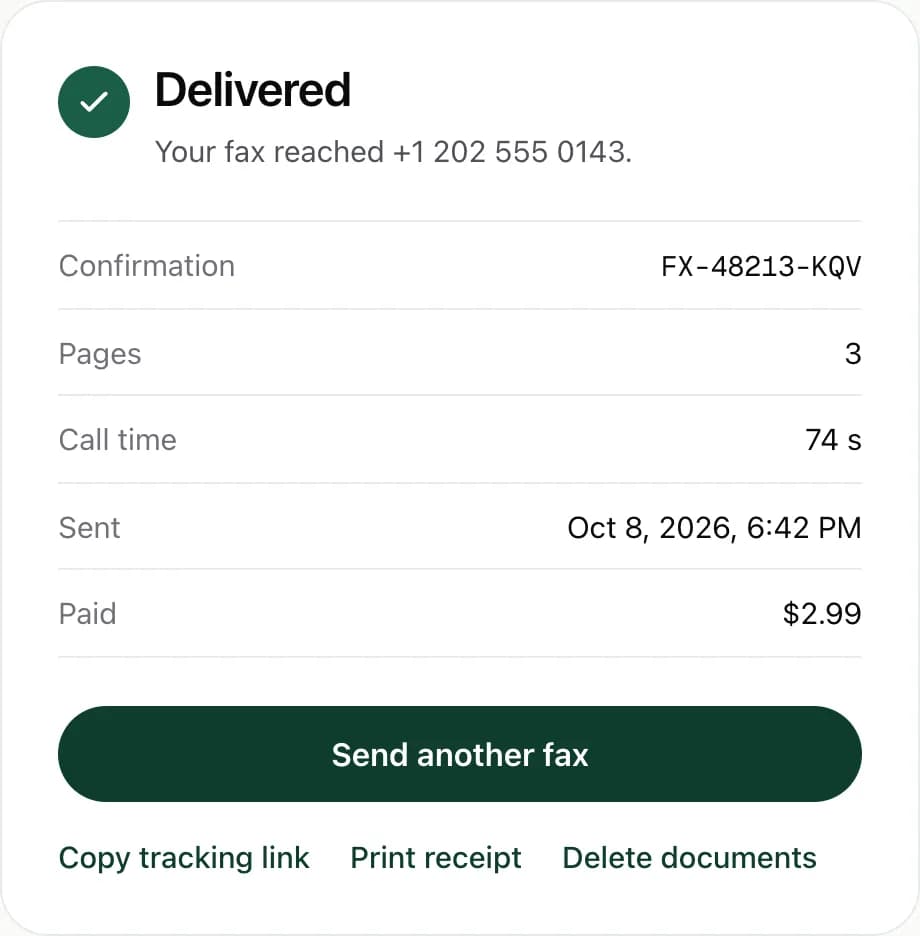
IRS CAF fax numbers by state
Send Form 2848 or 8821 to the CAF unit for the state where the taxpayer lives. The same numbers serve both forms.
| Taxpayer lives in | Fax number |
|---|---|
| Alabama, Arkansas, Connecticut, Delaware, District of Columbia, Florida, Georgia, Illinois, Indiana, Kentucky, Louisiana, Maine, Maryland, Massachusetts, Michigan, Mississippi, New Hampshire, New Jersey, New York, North Carolina, Ohio, Pennsylvania, Rhode Island, South Carolina, Tennessee, Vermont, Virginia, West Virginia | 855-214-7519 (Memphis CAF) |
| Alaska, Arizona, California, Colorado, Hawaii, Idaho, Iowa, Kansas, Minnesota, Missouri, Montana, Nebraska, Nevada, New Mexico, North Dakota, Oklahoma, Oregon, South Dakota, Texas, Utah, Washington, Wisconsin, Wyoming | 855-214-7522 (Ogden CAF) |
| Outside the US, APO and FPO addresses, American Samoa, Guam, the Northern Mariana Islands, Puerto Rico, the US Virgin Islands | 855-772-3156, or 304-707-9785 from outside the US (International CAF) |
From the IRS instructions for Forms 2848 and 8821 (irs.gov/instructions/i2848, last reviewed April 30, 2026), checked October 10, 2026. The IRS says the numbers may change without notice, so check the instructions before you send.
Signatures the IRS accepts by fax
The IRS says you must handwrite your signature on Form 2848 or 8821 if you file it by fax or mail. Digital, electronic or typed signatures are valid only when the form is submitted online.
On Form 2848 the taxpayer and the representative both sign and date; the representative generally signs within 45 days of the taxpayer’s signature, or 60 days for a taxpayer living abroad. A business signer adds their exact title, and spouses on a joint return each file their own form. Form 8821 needs the taxpayer’s signature and date.
So print the form, sign it in ink and scan or photograph the signed pages. A signature image pasted into a PDF counts as an electronic signature, which the IRS takes online only.
Mistakes that get a form sent back
The IRS lists these as common reasons it rejects a power of attorney or an authorization:
- A missing signature or date, from the taxpayer or the representative.
- Tax periods that aren’t specific, like “all years” or “all future periods”.
- Line 6 of Form 2848 checked without a copy of the earlier power of attorney attached.
- A missing designation, jurisdiction, or bar, license or enrollment number on Form 2848.
- A business signer’s title left out.
- A wrong SSN or EIN on Form 8821.
Also check the box on line 6 of Form 2848, or line 5 of Form 8821, if you want to keep earlier authorizations: left unchecked, the new form revokes them.
After you send it
The IRS works through faxed forms in the order they arrive and doesn’t tell you when yours is done; its Form 2848 and 8821 processing status page gives the current wait. Keep the FaxJet receipt and its tracking link.
These forms carry Social Security numbers. FaxJet keeps your document until you delete it, so once the receipt shows the fax was delivered, delete it from the tracking page. To write a cover page, use the free fax cover sheet maker.
Questions
Which fax number is mine, Memphis or Ogden?
It goes by the state the taxpayer lives in. Eastern states, plus Arkansas and Louisiana, go to Memphis; western states, plus Wisconsin, go to Ogden. The table on this page lists every state.
Can I fax a form I signed electronically?
No. The IRS takes forms with electronic, typed or image signatures only through its online submission (IRS.gov/Submit2848 or IRS.gov/Submit8821). A faxed or mailed form must be signed in ink.
Will the IRS confirm that it got my fax?
No. The IRS processes forms in the order it receives them and doesn’t notify you. A tax professional can see recorded authorizations in Tax Pro Account. Keep your fax receipt as proof of sending.
Does the IRS accept faxes from online fax services?
The instructions for Forms 2848 and 8821 don’t mention them. The IRS’s notice pages name online fax services as a way to reply and ask you to read the service’s privacy and security policies. FaxJet delivers to the IRS fax machine like any other fax.
What if I checked the box on line 4?
Then don’t use these numbers. A form for a specific use the IRS won’t record goes to the IRS office handling that matter.
Can these numbers change?
Yes, the IRS says they may change without notice. The numbers here come from the IRS instructions last reviewed on April 30, 2026, checked on October 10, 2026.